
- Adult children fear their aging parents living alone may fall, and nobody will know
- Aging parents living alone don’t like to feel controlled by their adult children
- Independence is extremely important when choosing a surveillance method
- Proper communication plays a major role in finding the best solutions
One of the biggest concerns for adult children is their aging parents living alone, who want to keep their home and independence. They feel good and don’t have major health issues. Thus, they don’t like being controlled and want to be in charge of their lives.
On the other side, we have the adult children who want to know their parents are safe. They live their own lives, in different cities in most cases, but tremble every time they get a phone call from an unknown number, thinking that something bad might have happened to their parents.
This article presents the best solutions for healthy communication between adult children and their parents to maintain a healthy balance in everyone’s lives.

What Do Adult Children Fear?
A major topic discussed in major caregiver communities is the risk of falling in aging parents. When you call your parents and there is no answer, you panic, thinking something bad has happened. This is because elders tend to hide or minimize falls so their children won’t worry about them.
The feeling is emphasized when children live far from their parents. The idea of their parents lying on the floor with nobody to help them is unbearable. As a result, adult children become overprotective and want to control their parents’ every move. On the other hand, their parents feel uncomfortable.
Unfortunately, this constant check, with the sole purpose of making sure the parents are ok, leads to arguments. Parents feel controlled, and children feel ignored. And everybody ends up moving in this circle for years, without even realizing.

Why Do Aging Parents Living Alone Refuse Help?
Aging parents who live alone refuse help because they do not like to be controlled. They want to be in charge of their lives and decisions. For them, wearables or cameras are not safety measures but surveillance.
Furthermore, they want to stay in their own home because this guarantees their independence. It is not the house that is keeping them there. This is where they have all the history and memories with their children growing up.
Why does being independent matter so much for aging parents?
Independence is how they see themselves:
- how they feel about their health;
- the things they can do without help from others;
- the idea that they don’t become a burden for the other family members;
- their own capabilities of taking decisions and controlling their lives.
When you ignore all these aspects, they feel controlled, leading to arguments. This is why we recommend you talk to them before forcing something they may not like.

Solutions that Work vs. Solutions that Are Rejected
As mentioned above, one of the biggest fears of adult children of their adult parents living alone is falling. So the first solution that comes to mind is a smartwatch with fall detection. And the parents accept the gift, use it for one or two days, but realize it is uncomfortable to sleep with, and within days it sits with the battery drained in a drawer.
Why don’t such solutions work? What can we do differently?
This is a problem for many families. Adult children buy different types of devices. The parents who live alone accept them but are not used to them, or find them too complicated. Thus, they don’t use them. So the next thing that comes to mind is installing a camera in the house. However, very few parents accept them. They are controlling and violating their intimacy.
If you don’t want to end up in such a situation, start with an honest talk. Tell your parents what concerns you have and allow them to present their point of view. Once you are on the same page, consider the following:
- Morning calls. You can call your parents on your way to work to see how they started their day. However, if they feel that it turns into a ritual of checking them, the morning check can turn into a morning argument.
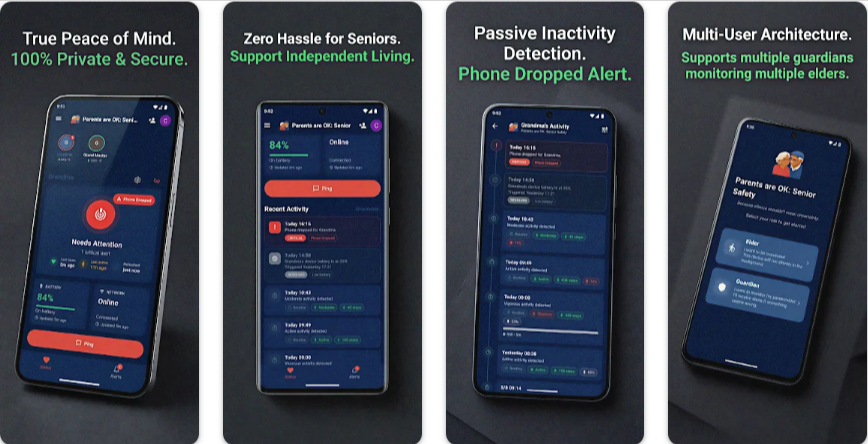
- Apps: there are different variants available, but the most appreciated are those that don’t require you to do anything. For example, the Parents are OK app only sends alerts to adult children if the phone is left untouched for an extended period of time or if the battery is running low. This is one of the options most accepted by aging parents living alone.
- Morning text. It is a good alternative to the morning call if you don’t want to wake your parents. This way, they are not stuck to the phone until you call.
- Home adjustments. Smart lights that activate when motion is detected can prevent falls. A doorbell camera can keep them safe.
Why You Need to Talk to Your Parents
As we presented above, you have your fears, and your parents have concerns. And this is normal. When addressing such a sensitive topic, make sure you do so calmly. Here are some ideas:
- “I am happy to see you are healthy and can look after yourself. But I’d feel much better if you installed the Parents are OK app. It only notifies me if you are not active on your phone. Would you please do it so I feel better?”
- “I am away and cannot visit you as often as I’d like. What about we keep in touch through a message each morning?”
- “I am happy you are healthy and live on your own. However, every time you don’t reply, I worry. What about we try this app that lets me know when you are not active on your phone for several hours, so I know you’re safe and you don’t have to worry about answering the phone or sending texts all the time?”
By focusing on your worries and offering alternatives to your parents, you’re more likely to get them to accept.
You can also build a plan together so both of you are aware of the steps that you are about to take and how to react in different situations:
- Choose a way to keep in touch that works for both of you.
- Agree on what happens if your parents miss the check-in (for example, if your parents don’t reply to your text in 2 hours, a neighbor will visit them to make sure they are ok).
- Discuss when something is not working properly.

Conclusion
No matter what solution you find, it is important to focus on your relationship with your aging parents living alone rather than on check-ins. Just keep things natural.